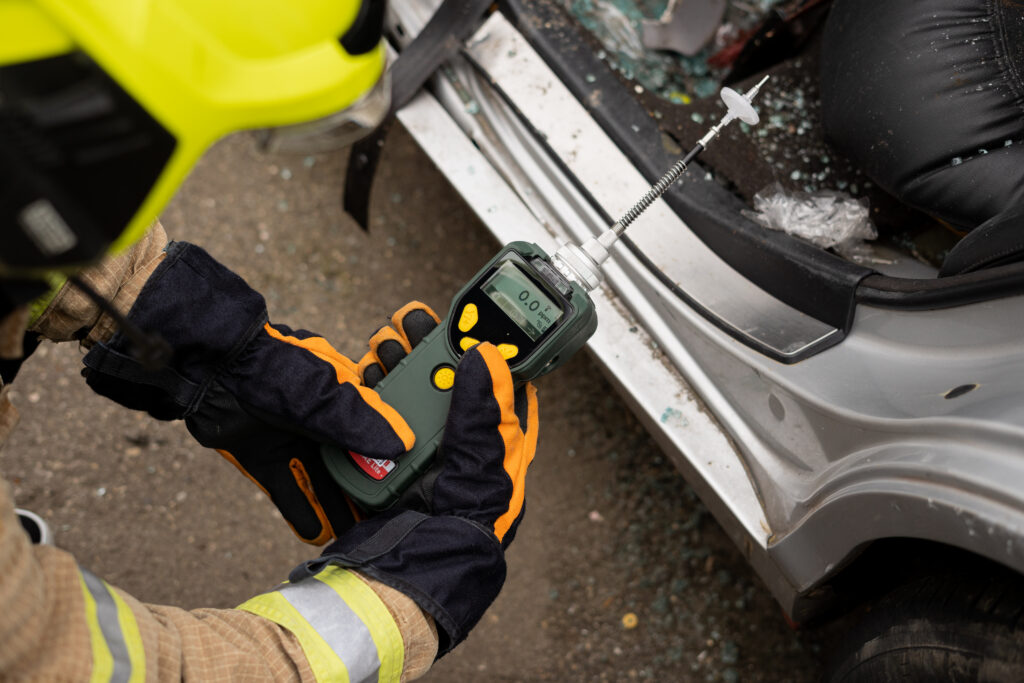
Gas detection is complicated, so it needs to be done properly, with the right equipment. So how do you land on the right gas detection instrument for the job at hand?
There’s a wide range of gas detection solutions out there: gas detection tubes, portable pumped or diffusion detectors, area monitors, fixed gas detection, and even flame detection. How do you work out the best way to detect gas in your specific situation?
It looks like a simple question, but it opens up several more. Is the most cost-effective option really the best one? Is there added value in a more expensive gas detection solution? What are the key parameters in the decision-making process?
What’s the purpose of the measurement?
This is the first question to answer before choosing gas detection equipment. It makes a real difference whether you’re trying to protect your people or your assets. It also matters whether your staff will always wear personal protective equipment, or only when you expect concentration levels to run too high.
This isn’t just about the measuring range of the instrument you need. It also shapes your procedures. What does an alarm on your instrument actually mean? Put on protective clothing? Evacuate? Don’t enter? These are sensitive decisions tied to your process, made on the basis of what this instrument reports. That’s exactly why it needs to be right.
Which gases can you expect, and at what concentration do you want to detect them? Is there a sensor that can pick up the gas at the concentration you need? Do different gases interfere with different sensors? Which gases are present in the atmosphere, in what combination, and at what concentration? These are important questions, because gas mixtures can cause sensors to misread. Even gas sampling tubes can’t always distinguish reliably between compounds, particularly when they’re chemically related. Mixtures can call for a broadband measurement solution, such as a photoionization detector. Even an LEL sensor is, in a sense, a broadband measurement solution.
Which gases do you expect to measure?
Usually you’ll have a reasonably good idea of which gases to expect. (If not, we’re happy to help you work out the best gas detection choice.) But it can pay off to rule out additional gas detection options too, just to be completely confident in your choice.
Different substances carry different risks: explosion, asphyxiation and poisoning are the main categories. The concentrations at which these substances occur also have implications for the equipment you need. Too high a concentration, for example, can render most electrochemical sensors unusable. Target gases can be lighter or heavier than air, which means different measuring points are needed to guard against every possible risk scenario.
Once you’ve established which gases to expect, it’s time to carry out a risk assessment in line with local laws and regulations. That may mean checking whether the concentration levels of the substances that carry risk stay within permissible limits. If they’re structurally above set limits, employees need to be protected, either by upgrading the process or through personal protective equipment. If limits are only occasionally exceeded, it depends on whether there’s a causal link to the production process; procedures may need to be tightened. And there’s another question worth asking: when is it safe again? A gas detection system helps answer that.
All of this matters when making decisions about gas detection, whether you need personal monitors as part of personal protection, or fixed equipment to keep track of concentration levels for just a few compounds, across an entire facility, or somewhere in between.
What are the safety standards?
Which risks can’t be mitigated? What level of safety needs to be provided? Procedures need to be followed that are specifically designed to make every action as risk-free as possible. Training staff is vital to doing this successfully, whether the risk is tied to specific production processes or to work carried out under a particular set of conditions, such as confined spaces or unloading containers.
What’s the next step?
Ideally, a gas detection specialist can offer you full monitoring of your gas-related hazards, whether that involves shutdown management based on rental equipment, long-term rental, or the sale of gas detection equipment. Good advice, support, training, calibration, maintenance and repair are all essential. Once you consult a specialist, it matters that these factors are properly covered: a well-equipped workshop, and well-trained, experienced technicians and trainers are needed to carry out your prevention plan the right way.
7Solutions has specialists in gas measurement and control technology. We’re brand-independent, which means we can offer you every brand of gas detection equipment needed for risk assessments or monitoring. Get in touch for more information. Put us to the test.