Good gas detection is the backbone of any effective safety strategy. Yet even in this highly specialized field, we keep seeing the same pitfalls recur among companies working with hazardous gases, confined spaces, or explosive atmospheres. Sometimes the consequences are minor, sometimes they’re severe: anything from a missed warning to a fully halted production line. In this article, we rank the 7 most common gas detection pitfalls from most to least critical, and show how to avoid them, with practical points of attention for your own gas detection setup.
1. Using the wrong device for the gases involved
Every gas detector is built for specific gases or sensor technologies. Assuming that one device covers every hazard is one of the most common, and most risky, misconceptions in gas detection. A standard 4-gas monitor with O2, LEL, CO and H2S sensors, for example, won’t protect against low concentrations of volatile organic compounds (VOCs), and an electrochemical sensor often won’t react to substances that require infrared or PID detection. Always select devices based on the actual hazards present in your work environment, not on whatever happens to already be in the cabinet.
As an independent supplier, 7Solutions works with multiple manufacturers and sensor technologies, so our advice comes from your specific situation rather than from a single brand. Not sure whether your current devices match the gases in your work environment? Get in touch and find out which device genuinely fits. Want to test before you buy? Our rental and lease options let you try a device in practice without committing to a purchase.
2. Ignoring warning signals
Never ignore a warning signal. A common mistake is failing to respond correctly to an alarm, for example, because staff label an alarm as “false” without verifying it, or because protocols don’t clearly define who takes what action. This kind of human assumption is often more damaging than a technical fault. Set up clear alarm protocols and make sure your team is trained to act correctly, regardless of the situation or time of day.
Schedule an advisory conversation to determine which platforms and devices fit your risk assessment and protocols.
3. Insufficient training and awareness
A common assumption is that operating gas detectors is self-explanatory. In practice, insufficient training leads to misread measurements, incorrect use of calibration gas, or unintentional exposure because an employee doesn’t know how to test a device before use (the so-called bump test). Invest in training so your team truly understands gas detectors and detection systems, and responds correctly, even under time pressure.
Our technicians train your team in correctly using gas detectors, from daily bump tests to responding properly to alarms. Take a look at our training options or ask about on-site training tailored to your own devices and work environment.
4. Lack of regular maintenance
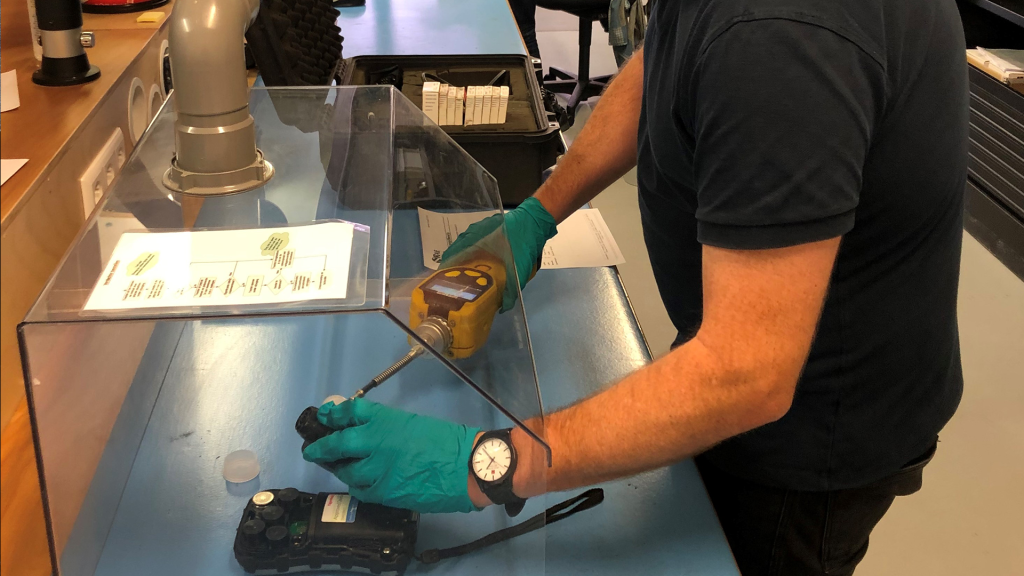
Gas detectors aren’t install-and-forget technology. Sensors age, lose sensitivity, and can become less reliable through contamination or exposure to certain substances. Neglected maintenance can lead to inaccurate gas readings, in the worst case, without this being immediately visible. Schedule regular inspections and calibrations to safeguard the reliability of your devices, and put this in a fixed maintenance schedule rather than handling it ad hoc.
Our in-house service and calibration department takes care of regular maintenance and calibration for your gas detectors, so you don’t have to track when a device is due yourself. Request a tailored maintenance schedule and keep your devices demonstrably reliable.
5. Overlooking environmental conditions
Don’t underestimate how much work environments vary. Temperature, humidity, altitude and other environmental factors can all affect gas detector performance, from sensor response time to battery life in extreme cold. A device that performs excellently in a heated production hall may behave differently in outdoor storage or a damp sewer pit. Factor this in when selecting and placing your devices, and ask for specifications under your own conditions if you’re unsure.
6. Lack of integration with other safety systems
Isolated gas detection technology, without a link to your broader safety system, can slow down response time during an incident. When an alarm is only visible locally and isn’t automatically shared with a control room or remote colleagues, it costs valuable time before the right people are aware. More and more organizations are therefore moving from standalone devices to wirelessly connected systems, where readings are shared in real time with colleagues and a central platform. Make sure your gas detectors can communicate seamlessly with your other safety systems.
With wireless and cloud-connected solutions, we support you in integrating gas detection into your broader safety system. Ask about the options for wireless gas detection within your organization.
7. Neglected data collection and analysis
Data from gas detectors offers valuable insight into potential hazards, from recurring peak readings at specific locations to patterns that point to a slow leak. Don’t neglect the analysis of this data: it lets you take preventive measures and manage risk proactively, instead of only reacting after an incident has already happened.
Cloud-connected solutions make the data analysis behind this clear and accessible. Get in touch to discuss how to get more out of your measurement data.
In conclusion
By staying aware of these pitfalls and acting proactively, you significantly improve the effectiveness of your gas detection and create a safer workplace. Safety isn’t a matter of compromise: avoid these pitfalls and protect what matters most, the wellbeing of your employees and the continuity of your business.
As an independent gas detection supplier, we work with multiple manufacturers, including WatchGas, RAE Benelux, Dräger, Crowcon, Honeywell and Teledyne, and advise the device that genuinely fits your situation, including the right sensor technology for the gases in your work environment. Our technicians train your team in correctly using gas detectors and responding properly to alarms. Our in-house service and calibration department handles regular maintenance and calibration, keeping your devices reliably accurate. And with wireless and cloud-connected solutions, we support you in integrating gas detection into your broader safety system, including the data analysis that comes with it. For organizations operating internationally, we also handle the export of gas detection equipment, including the necessary documentation.